
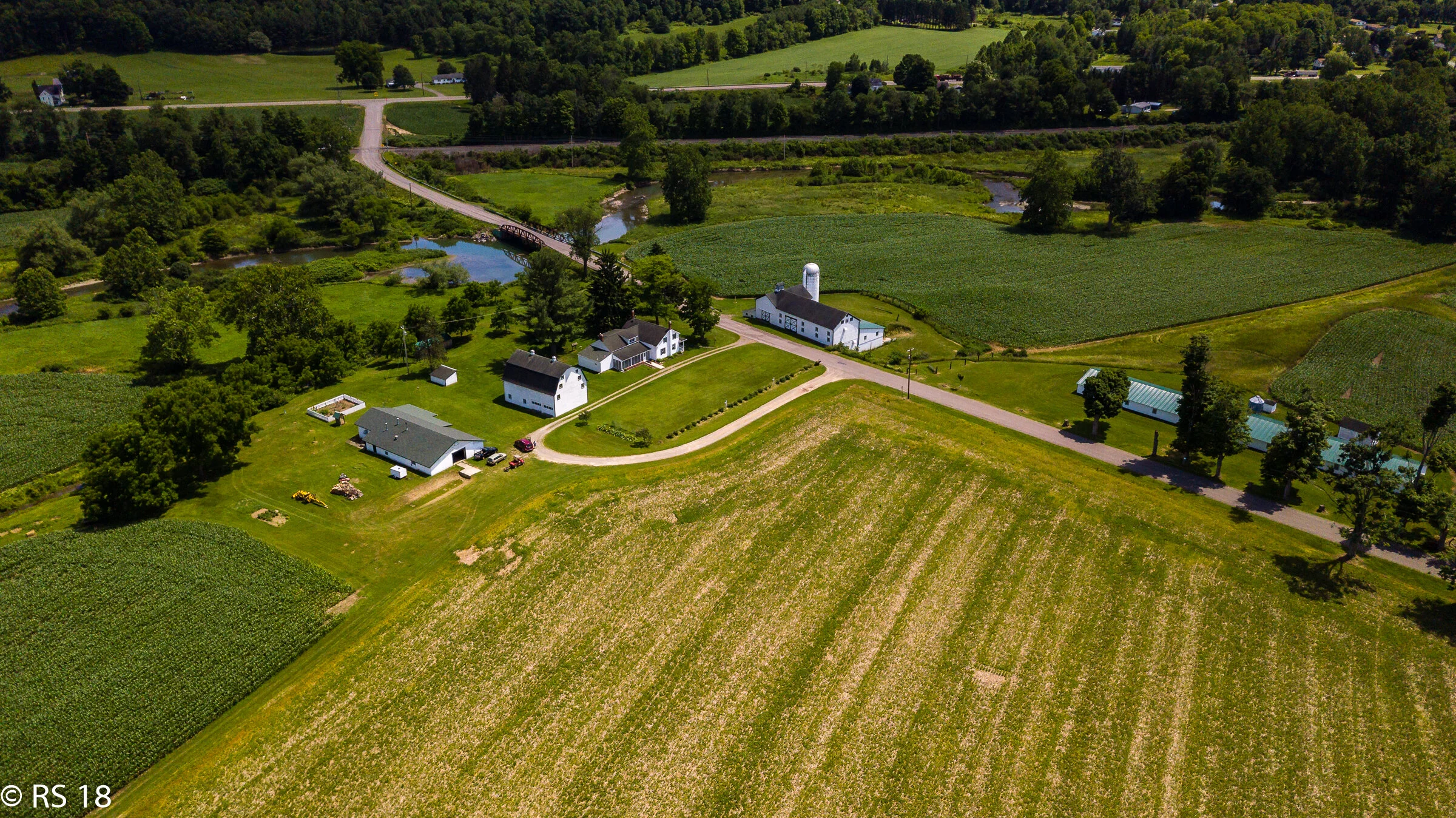
About Howland Farm
Future Opportunity
The future of Howland Farm is full of possibility.
As the next chapter approaches, the goal is to pass the farm on to someone with the passion and resources to make it their own. With its natural beauty, rich history, and versatile land, the property is well-suited for a variety of visions—a small animal enterprise, an event venue, a brewery, an elder care home, a crop testing lab, or countless other possibilities.
The only limit is your imagination and the drive to bring that vision to life.
If this opportunity speaks to you, we invite you to get in touch and become part of the farm’s next chapter.
Present
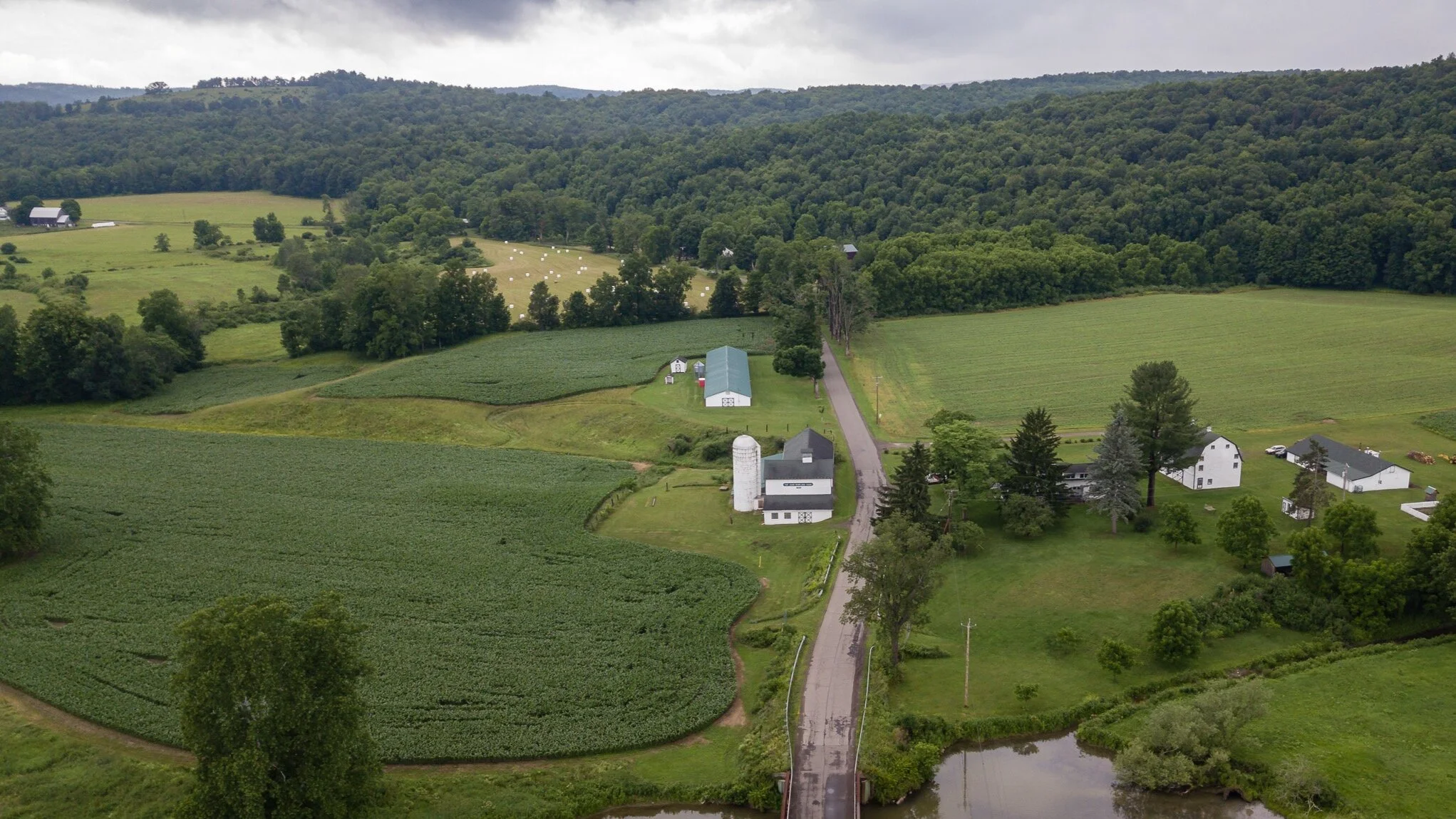
Today, Howland Farm is a place to stay, gather, and celebrate.
The farm welcomes guests for overnight stays through Airbnb and VRBO, offering a peaceful retreat surrounded by open land, scenic views, and a sense of history. Guests can explore the banks of the New York State protected trout stream or hike to the backwoods cabin, built by our father, John Howland, from the staves of an old wooden silo. The property also hosts private events and weddings, featuring a renovated historic barn and open outdoor spaces that can be tailored to gatherings of all kinds.
Whether you’re here for a weekend escape or a special occasion, Howland Farm offers a setting that feels both inviting and memorable.

Past
The Howland Farm is located in a fertile valley with a long history. From radiocarbon dating, the earliest human habitation in the valley was around 4500 years ago. One hundred years before Columbus, the population of the valley was greater than today, due to the success of the Iroquois centered in this area.
Following the Revolutionary War, nearly free land given to war veterans brought many settlers. The modern era began with the building of the railroad, visible from the farmhouse, by Hungarian contract laborers in 1868.
Settlers were attracted to the valley by the abundant water. There are still three dam sites, used by water-powered sawmills, visible on the farm. A short walk leads to a freshwater spring that flows all year.
Horse agriculture ended following World War II. The last of the much loved Howland Farm workhorses, Queen, died in 1968.
The current farm size of 218 acres is comprised of the original farmstead, established in 1842, and three parcels added over the years.
